
 Fact Checked | Evidence Based Research
Key Takeaways
- Focus Factor is a popular brain health supplement that claims to enhance memory, focus, and cognitive performance.
- Focus Factor has received mixed reviews. While some users notice improvements in focus and memory, others find the results less noticeable or inconsistent.
- Some users report mild side effects such as stomach discomfort, headaches, or muscle aches, especially in the beginning.
- Though it’s a good multivitamin with cognitive support benefits, individuals looking for more powerful cognitive enhancement might want to explore other products.
- Overall, Focus Factor is an affordable option for general brain health, but those seeking substantial or long-term cognitive improvements may need to look elsewhere.
There’s something deeply frustrating about forgetting the name of someone you just met or losing your train of thought mid-sentence.
Whether you’re buried in the stress of daily tasks, navigating an intense study schedule, or simply noticing the little mental hiccups that come with age, the truth is, we all want a sharper, more reliable mind.
It’s no wonder brain health supplements are quickly becoming a go-to for anyone seeking natural ways to care for their cognitive well-being.
If you’ve felt that pull to give your brain a little extra support, you might have stumbled across Focus Factor. Promising to boost memory, concentration, and focus, while doubling as a multivitamin, it’s a product that’s captured plenty of attention.
But claims are one thing; results are another. Does Focus Factor live up to its potential? How does it compare to other brain supplements out there? And what exactly is inside those blue bottles? We have the answers; read along!
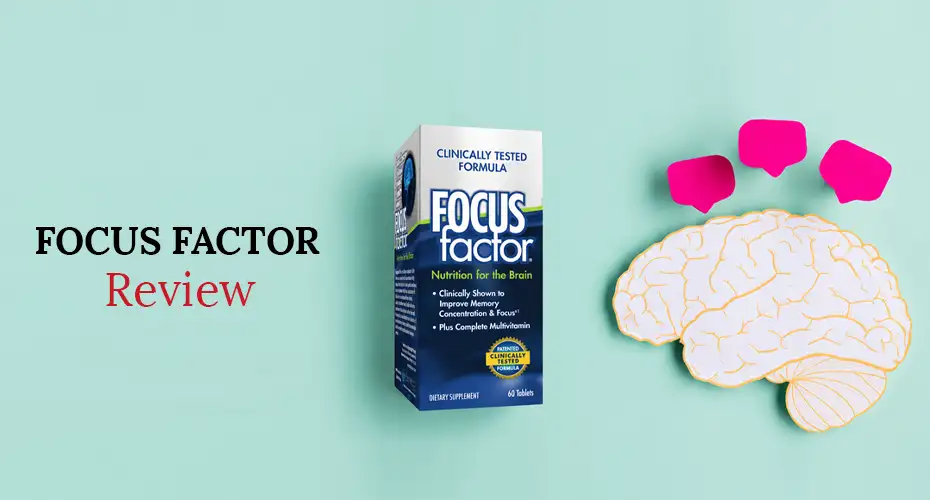
Focus Factor – Image/Wellness Digest
Highlights, Pros & Cons of Focus Factor
editor’s rating
highlights
- Caffeine-free formula with no stimulant crash
- Affordable alternative to premium nootropic supplements
- Trusted by millions of users for brain health support
- Available in multiple package sizes with bundle savings
All the process mentioned on their websites are subject to change.
![quality image]()
-
3.8 /5
Quality

![support image]()
-
3.6 /5
Support Research

![reputation image]()
-
3.7 /5
Reputation

![price image]()
-
3.7 /5
Price

- Includes a comprehensive multivitamin blend.
- Features clinically tested ingredients like Bacopa and DMAE.
- Supports memory, concentration, and focus.
- Free from caffeine.
- Functions as both a brain supplement and a multivitamin.
- Offers various package sizes with bundle discounts.
Pros
- Requires up to 4 tablets daily for a standard dose.
- Possible side effects like stomach discomfort for some users.
- Contains allergens like fish (anchovy, sardine, salmon) and soy.
- Not recommended for pregnant women or women of childbearing age.
- Price may add up for higher dosages or extended use.
Cons
Ingredient Analysis
Focus Factor boasts a blend of over 40 ingredients, combining vitamins, minerals, and nootropic compounds designed to support brain health. At first glance, it’s clear the formula aims to cover a lot of ground.
You’ll find everyday vitamins like A, C, and E, alongside minerals such as magnesium and iron. Digging deeper, there’s a proprietary blend that includes lesser-known ingredients like Bacopa monnieri, inositol, and trace elements like boron.
Here’s a detailed breakdown of the key ingredients;
Dimethylaminoethanol (DMAE bitartrate)
DMAE is a compound naturally found in the brain and certain fish, and it’s known to play a role in the production of acetylcholine, a neurotransmitter critical for memory and learning.
Its inclusion in Focus Factor makes sense, as acetylcholine is often referred to as the “learning neurotransmitter.” By supporting its production, DMAE may enhance cognitive function, particularly memory retention and focus.
Research backs up DMAE’s potential benefits. A 2012 study suggests it might improve attention spans and reduce cognitive decline, especially in aging adults. Additionally, it has mild antioxidant properties, potentially protecting brain cells against oxidative stress. While more robust, large-scale studies are needed, the available evidence supports DMAE’s role as a nootropic ingredient.
Overall, its presence in Focus Factor aligns with the product’s aim to enhance cognitive performance.
We approve this ingredient.
According to Dr. Emily Thompson -Clinical Psychologist
DMAE’s ability to support acetylcholine production positions it as a promising nootropic. While research supports its potential to enhance focus and memory, additional studies are required to establish its long-term efficacy.
L-Glutamine
As discussed previously in Focus Factor Review, L-glutamine is an amino acid that serves as a building block for proteins and neurotransmitters in the brain. It’s also a precursor to glutamate, a key neurotransmitter involved in learning and memory. This dual function makes glutamine an interesting addition to brain health supplements like Focus Factor.
A 2020 study has shown that glutamine supplementation might enhance mental clarity and improve stress resilience by supporting healthy neurotransmitter activity.
Interestingly, glutamine is particularly helpful during periods of heightened stress or mental fatigue, as it provides the brain with an alternative energy source when glucose levels dip.
Furthermore, its ability to support gut health indirectly benefits cognitive function. The gut-brain connection is well-documented, with gut health playing a crucial role in mental health. While more research specific to glutamine’s cognitive effects is required, its inclusion here is a solid choice, especially for individuals looking to combat mental fatigue.
We approve this ingredient.
Vitamin D (as cholecalciferol)
Vitamin D is celebrated for its role in bone health and immune support, but its contributions to cognitive health remain less clear. While a 2023 study links vitamin D deficiency to cognitive decline, the scientific backing for its effectiveness in brain supplements like Focus Factor is relatively weak.
The main issue lies in dosage and context. The 2.5 mcg of Vitamin D in Focus Factor is far below what’s typically recommended for therapeutic effects, such as 1,000–2,000 IU daily for adults.
This amount is unlikely to make a significant difference in supporting brain health or preventing cognitive issues.
Additionally, most people get a decent amount of Vitamin D from sunlight and fortified foods, so its inclusion here is more redundant than beneficial for most users.
While it doesn’t harm the formula, its impact as a brain health booster is unconvincing.
We, therefore, don’t approve this ingredient.
Vitamin E
Vitamin E is an antioxidant that plays an important role in protecting cells from oxidative damage. However, in the context of brain supplements, its effectiveness is less definitive.
While there’s some evidence to suggest that Vitamin E might help delay cognitive decline in individuals with mild to moderate Alzheimer’s, its benefits for healthy individuals are minimal.
Focus Factor includes 20.1 mg of Vitamin E, which is around 134% of the daily recommended value. While this amount is sufficient for general antioxidant support, it’s not particularly targeted or necessary for brain health.
Many experts argue that the benefits of Vitamin E supplementation are best seen in extreme cases of deficiency, which are rare. For the average user, dietary sources like nuts and seeds typically provide enough Vitamin E, making its inclusion in Focus Factor less impactful.
As a result, we don’t approve this ingredient.
Vitamin A
Vitamin A is a fat-soluble vitamin known for supporting vision, skin health, and immunity. It also functions as an antioxidant, combating free radicals in the body. However, its role in cognitive health is not as well-defined or extensively researched.
Focus Factor includes 1200 mcg of Vitamin A, which is approximately 133% of the recommended daily intake. While this may provide general health benefits, its relevance in a brain health supplement is questionable.
Most cognitive improvements linked to vitamin A are indirect and occur only in cases of deficiency. For those consuming a balanced diet rich in fruits, vegetables, and dairy products, additional supplementation is rarely necessary. Excessive amounts of vitamin A can even pose risks, such as toxicity that may harm the liver over time.
So, while vitamin A is undeniably vital for overall health, its inclusion in Focus Factor feels misplaced, offering no clear advantages for enhancing memory, focus, or cognitive function.
We, therefore, don’t approve this ingredient.
Side Effects & Safety
Focus Factor is marketed as a safe supplement to help your brain health and cognitive function. Nevertheless, as with any supplement, it can result in certain side effects, especially when it is used in the early phases. Mild gastrointestinal discomfort like nausea, bloating and diarrhea has been reported by many users. There are also reports of headaches, muscle pains, and dizziness but these effects usually go away as the body adapts to the supplement.
Although the ingredients of Focus Factor are generally easily tolerated, its proprietary combination of nootropic ingredients, which contains substances such as DMAE, is not always easily tolerated. Other people get side effects with these neuroactive substances which include sleeping difficulties, jitters or restlessness. Also, the given supplement can lead to skin reactions or even allergic reactions especially in individuals who are allergic to soy or fish among others. Also, other users have experienced more severe reactions like fishy body odor, migraines and even feeling chest pains.
Persons who are taking prescription drugs, particularly those used to thin blood, diabetes drugs, or psychiatric drugs, ought to consult a medical professional prior to using Focus Factor because it can interact with some medicines.
Various users also raise complaints concerning the proprietary blend that lacks transparency in the product. Focus Factor does not show the dosages of its ingredients which makes it difficult to determine the strength of each ingredient. The absence of such clarity, combined with the scarcity of independent studies on the long-term effectiveness of the supplement, casts doubt on its effectiveness as a whole. The latest clinical trial is a self-funded study carried out in 2011, which may suggest bias.
Although these issues exist, most users benefit from an enhanced focus and mental functioning. The effectiveness differs, however, between different people and some may not undergo substantial improvements even after long usage.
When deciding to take Focus Factor, it is vital to consider individual tolerance particularly when pregnant, breastfeeding or have an allergy to soy or fish, as well as taking medications. Before including this supplement in your daily activity, it is advisable to consult with a medical professional to determine whether it is safe or not depending on your personal health requirements.
Focus Factor: Assessing Its Effectiveness, Taste, and Ingredient Transparency
Focus Factor is a supplement intended to enhance cognitive performance, but with some very frequent complaints, it has obtained mixed feedback. The pills are not palatable or easy to swallow, as they are very large in size, and many users do not like the smell and taste of the pills. Moreover, the need to take several pills every day, four in general, has been inconvenient for some people.
Regarding effectiveness, it has been noted that there is minimal or no change in memory, focus, or concentration despite the long-term use of the product, up to one month. Such no-brainer benefits have made some doubt whether Focus Factor is really doing what it says it is doing.
In 2011, Focus Factor funded a clinical study that reported improvements in memory and focus in six weeks, though the experts have highlighted possible bias by the very fact that the study was self-funded. Moreover, major independent studies on the long-term effects of the supplement have not been conducted so far, and it is not yet clear how effective it is.
The fact that the supplement has a proprietary blend also makes the situation more problematic, since it is not indicated what doses of the separate ingredients are being used. This lack of transparency of ingredients can be unsettling to users, who would desire to know exactly what they are taking.
Although users generally find Focus Factor tolerable, there have been minor side effects like stomach discomfort and headaches, especially when used for the first time. These are usually countered by the body adapting but it is always a good idea to consult a healthcare professional before taking the supplement, particularly in the case of people with underlying health issues or under medication.
To conclude, although Focus Factor can offer some benefits to certain users, its taste, pill size, the absence of ingredient transparency, and unreliable outcomes can be an indicator that it does not necessarily suit everyone.
During our research, we came across a video by @Savvy-Health. The video explains several reasons why Focus Factor cannot be considered a brain supplement.
Focus Factor Review
Real Customer Reviews
Focus Factor has garnered mixed feedback from users, reflecting a broad spectrum of experiences. On Amazon, the supplement enjoys a solid 4.4 out of 5 stars based on over 5,000 reviews.
-
One user who awarded a 5-star rating shared,
- Focus Factor has been a staple in our house for a few years now. Now being a little more older or seasoned it helps with focus and attention and there have been no ill effects. My husband and I have been using this product and are happy with the results. It doesn’t make your mind perfect, but it definitely helps with keeping focus and alertness. I do recommend to anyone needing that boost.
- I took them exactly as directed, 4 per day with food. I noticed myself being extremely nauseous and feeling super uncomfortable. I tried lowering the dose to 2 per day with food but the nausea and stomach pain and discomfort continued. To the point where I couldn’t eat at all and had a headache and stomachache. I wish I could return it!!! or at least get my money back!!
On the other hand, there are users who faced challenges. One dissatisfied customer explained
However, its Trustpilot score is notably lower at 3.2 out of 5, though this is only from one review, which limits overall insight.
Focus Factor’s reviews indicate that while many see noticeable benefits in their focus and memory, potential side effects such as nausea and digestive discomfort cannot be ignored.
Where to Find the Best Value
Focus Factor is widely available on platforms like Amazon, its official website, and various third-party retailers. Pricing starts at $26.99 for 150 tablets on the official site. On Amazon, you get a slight decrease to $26.89.
When compared to similar brain health supplements which typically cost $30–$40 for a month’s supply, Focus Factor offers a more budget-friendly option, especially for larger quantities. Always check for discounts or bundles on the official site or Amazon to maximize savings.
While Focus Factor may cost less, it’s worth considering the value of various formulas to fit your specific needs and budget.
FAQ
Q: Is Focus Factor a good thing to take?
Q: Can Focus Factor be taken at night?
Q: Is Focus Factor safe to use, and does it work?
Q: How effective is Focus Factor?
Q: How long does Focus Factor take to work?
Conclusion
Focus Factor stands out with its dual role as a brain supplement and multivitamin. It combines clinically tested ingredients like Bacopa and DMAE to support memory and focus. Its multivitamin formulation adds a unique layer of everyday health benefits.
However, side effects, including stomach discomfort in some users, and allergens like fish and soy are a possible concern. The requirement of taking up to four tablets daily might also be inconvenient for busy lifestyles.
If you’re considering Focus Factor, weigh its benefits against its limitations. Brain health is deeply personal, so it’s worth exploring alternatives to find the right fit. Always consult a healthcare provider while at it.
- New insights on dimethylaminoethanol (DMAE) features as a free radical scavenger: https://doi.org/10.2174/187231212800229282
- The Possible Importance of Glutamine Supplementation to Mood and Cognition in Hypoxia from High Altitude: https://doi.org/10.3390/nu12123627
- The Role of Vitamin D in Health and Disease: A Narrative Review on the Mechanisms Linking Vitamin D with Disease and the Effects of Supplementation: https://doi.org/10.1007/s40265-023-01875-8
- Vitamin E for Alzheimer's dementia and mild cognitive impairment: https://doi.org/10.1002/14651858.CD002854.pub4



 This article contains incorrect information.
 This article doesn’t have the information I’m looking for.
Hints on how to write a helpful review
A great review should have the following qualities:
We have high level of professional editorial section with zero tolerance policy on fake reviews.
To maintain the genuineness of our brand, we ensure all customer reviews submitted to us are verified and confirmed before publishing. Though we might not be a 100% accurate, however, we try our best to ensure being next to best. For a thorough verification of submitted reviews, we spend close to 7 working days before allowing any customer review to be published since we also work on the earliest submissions first.