
 Fact Checked | Evidence Based Research
Overview
Walk into any big-box store and you’ll find two separate aisles for this problem — one stacked with fans and portable ACs, another lined with space heaters. You buy one in June, store it by September, pull out the other one by November. It’s a cycle that eats closet space, drains your wallet twice, and solves the same underlying issue two different ways.
EpiCooler is built on the premise that this split doesn’t need to exist. One unit, one plug, one device that sits in your room and does whatever the season demands. That pitch is simple enough — but does the execution actually hold up?
We dug into the technology, combed through what real buyers are saying, and broke down exactly what you’re getting for the price. Here’s the full picture.
What Is EpiCooler?
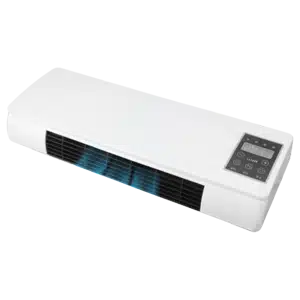
EpiCooler is a standalone climate device — not quite an air conditioner, not quite a space heater, but a legitimate combination of both packed into a footprint small enough to sit on a nightstand or desk.
It runs on a standard wall socket, needs no drilling or mounting, and gives you six distinct operating modes including dedicated cooling, heating, fan-only, and an energy-saving setting. You control everything through a touchscreen panel on the unit itself or through the wireless remote that comes in the box.
What sets it apart from similarly priced portable devices is the engineering inside. Most budget-friendly portable coolers use evaporative or fan-based mechanisms that only work well in low-humidity conditions. EpiCooler uses a proper coil-based cooling system paired with a PTC ceramic heating element — technologies borrowed from more serious appliances, shrunk down into a consumer-friendly package.

EpiCooler – Image/Wellness Digest
About the Manufacturer
EpiCooler comes from a brand that has deliberately built its product line around portable, no-modification home comfort devices. The philosophy is straightforward: most people don’t need a whole-house climate overhaul — they need one room to be livable, without the cost and hassle of a permanent installation.
The brand backs this with concrete quality commitments. Every unit ships with a one-year warranty and a 30-day money-back window — meaning if EpiCooler doesn’t deliver in your space, you’re not stuck with it. Products are sold exclusively through the official website, which cuts out the gray-market middlemen and ensures what you receive is genuine.
Highlights, Pros & Cons of EpiCooler
editor’s rating
 3.7 / 5.0
Brand Highlights
- True dual-function: cools in summer, heats in winter
- No installation — operational within minutes of unboxing
- Handles rooms up to 51 m² / ~550 sq ft
- Six operating modes for flexible comfort control
- Whisper-quiet — routinely described as “sleep-safe” by owners
- Touchscreen + remote control included
- Overheat protection, overcurrent protection, live temperature monitoring
- 30-day money-back guarantee + 1-year warranty
All the process mentioned on their websites are subject to change.

-
3.8 /5
Quality

-
3.6 /5
Support Research

-
3.7 /5
Reputation

-
3.7 /5
Price
- One purchase replaces two seasonal appliances
- Ideal for renters — zero modification to the property needed
- Light enough to carry between rooms without effort
- Runs at significantly lower energy draw than central HVAC
- Safety profile superior to most standalone space heaters
- Quick temperature response — most users feel a difference within minutes
Pros
- Single-room focus — not a solution for open-plan or multi-room homes
- Sold only through the official website
- Vents need occasional cleaning to maintain peak output
Cons
How Does EpiCooler Work?
The short answer: two separate internal systems sharing the same chassis and fan.
When you switch to cooling mode, the unit draws warm air from your room and pulls it across a set of internal cooling coils. Heat transfers from the air into the coils, and what comes out the other side is noticeably cooler. It’s a heat-exchange process — the same fundamental physics behind every proper air conditioning system, scaled down and made portable.
Switch over to heating mode and EpiCooler hands things off to its PTC ceramic element. PTC stands for Positive Temperature Coefficient, which describes a specific electrical property these ceramics have: the hotter they get, the more their resistance increases. In practical terms, this means the element regulates itself — it can’t spiral into dangerous temperatures the way old metal-coil heaters can, because the physics work against runaway heat buildup. The warmth it produces is steady and consistent rather than spiking and fading.
In both modes, the internal fan does the distribution work — pushing temperature-changed air out into the room rather than letting it pool near the unit. This is the difference between a device that changes the air right in front of it and one that actually affects room temperature, and EpiCooler is built to do the latter.
Who Should Use EpiCooler?
EpiCooler makes the most sense for people whose living situation creates a specific kind of frustration: they need room-level climate control and they can’t — or don’t want to — install anything permanent.
Renters are the obvious primary audience. Wall-mounted AC units typically require landlord approval, property modifications, and a deposit of time and money most tenants aren’t willing to spend on a place they might leave in a year. EpiCooler sidesteps all of that entirely.
But it’s equally useful for homeowners who only need to condition one or two rooms. Running a central HVAC system to cool a single bedroom at 11pm is wasteful in a way that’s hard to justify once you start seeing your electricity bill. Targeted room cooling — only where and when you need it — is simply more efficient.
Remote workers, light sleepers who need quiet nighttime cooling, people in shared homes where temperatures are a constant negotiation — EpiCooler fits a surprisingly wide range of everyday scenarios.
It is not the right tool for large open spaces, multi-room homes used as a single zone, or anyone dealing with severe climate control needs. For those situations, a more powerful system is the honest recommendation.
Technology Breakdown
Coil-Based Cooling System
EpiCooler’s cooling function runs on a heat-exchange coil — the same mechanism used in window and split AC units. Room-temperature air passes across the coil surface, sheds its thermal energy, and gets recirculated as cooler air. Research published in MethodsX confirmed that coil-based heat exchange is an effective approach to air temperature reduction even in compact device formats.
PTC Ceramic Heating Element
The heating side relies on positive temperature coefficient ceramics, which self-regulate by increasing electrical resistance as temperature rises. This eliminates the need for a separate thermostat to prevent overheating.
Variable-Speed Internal Fan
The fan circulates air actively through the room, ensuring temperature changes reach beyond the immediate vicinity of the unit. Research confirmed that active fan circulation meaningfully improves heat and cool distribution across a room’s full volume.
Live Temperature Sensor with Auto-Cutoff
EpiCooler monitors its own internal heat in real time. If operating conditions exceed safe limits, the sensor triggers an automatic reduction or full shutoff before any damage occurs.
Overcurrent Protection Circuit
A dedicated overcurrent circuit shields the unit from electrical damage during voltage spikes or power irregularities. Materials journal research confirmed that overcurrent protection substantially reduces the risk of device failure under abnormal power conditions.
Benefits of EpiCooler
- Replaces Two Devices With One
The financial and logistical case here is hard to argue with. One EpiCooler at $137.99 replaces a portable cooler and a space heater — devices that, purchased separately at even modest quality levels, easily cost more combined. - Genuinely Zero Setup
“Plug-and-play” gets thrown around a lot. With EpiCooler, it’s literally accurate — unbox, plug into a wall socket, and the device is ready. No app pairing, no installation guide to follow, no tools needed. Most people have it running within five minutes of opening the box. - Quiet Enough to Disappear
The operational noise level is the feature that surprises buyers most. Real user reviews don’t just say it’s quiet — they specifically mention running it while asleep, during calls, and through work sessions without any distraction. In a category where noise is usually the main complaint, EpiCooler consistently earns the opposite feedback. - Room-Targeted Energy Use
Central HVAC systems condition entire homes whether or not every room is occupied. EpiCooler only conditions the room it’s in, and only when it’s on. For single-room use, this translates to a meaningfully smaller electricity draw compared to whole-home systems. - Safety Architecture That Actually Holds Up
The combination of self-regulating PTC ceramics, a live temperature sensor, automatic cutoff, and overcurrent protection gives EpiCooler a multi-layered safety profile. Traditional space heaters often rely on a single bimetallic thermostat — a far simpler (and less reliable) safeguard. EpiCooler’s approach is closer to how more expensive appliances are engineered.
Is EpiCooler Safe to Use?
Yes — and specifically safer than the category average for portable heating devices.
The PTC ceramic element cannot overheat by design. The temperature sensor provides continuous internal monitoring with automatic response. The overcurrent protection guards against electrical faults. The exterior casing stays cool to the touch during operation — a meaningful difference from space heaters where the surface itself becomes a burn hazard.
For households with children or pets where a hot surface is a real concern, EpiCooler’s cool exterior is a practical safety advantage, not just a marketing claim.
Standard appliance sense still applies: stable flat surface, unobstructed vents, unplugged when sitting unused for extended periods.
Side Effects
Being clear about limitations is part of an honest review.
EpiCooler works within a defined footprint — rooms up to approximately 550 square feet. In larger or open-plan spaces, you’ll notice the effect near the unit but may find it doesn’t reach the far corners of the room effectively. For anything beyond a standard bedroom or mid-sized office, the physics start working against you.
The vents need to stay clear of dust and debris to maintain performance. This isn’t a complicated maintenance requirement — a wipe-down every few weeks is sufficient — but it’s worth knowing that neglecting the vents will reduce output over time.
EpiCooler is also only available on the official website. For buyers who prefer purchasing through Amazon or retail stores, this is a genuine friction point.
Pricing & Packages
EpiCooler is currently available at a promotional discount through the official website.
Price:
- 1 Unit $137.99 (per unit $137.99)
- 2 Units $221.98 (per unit $110.99)
All packages come with free shipping on select bundles, a 1-year warranty, and a 30-day money-back guarantee. The money-back window is the more practically useful of the two — it gives you a full month of real-world use to decide if EpiCooler works for your space before committing.
What Customers Are Saying
- Summer used to wreck my sleep. I’d wake up drenched and miserable every morning. Since getting EpiCooler, that’s just not a problem anymore — the bedroom actually stays cool and I wake up feeling normal. — Lauren P.
- I only needed the living room comfortable at night — not the whole house. This thing handles it perfectly and my electricity bill has actually gone down since I stopped running the ducted system for one room. — Ben T.
- The portability is what got me. I use it in my office during the day and wheel it to the bedroom before I sleep. One device, two rooms — that’s genuinely useful.”
Frequently Asked Questions
Q: How fast does it actually change the temperature?
Q: Will it handle a large living room or open-plan space?
Q: How loud is it on high settings?
Q: Can I travel with it?
Q: Does the remote work through walls?
Q: What happens if there’s a power surge?
Q: Is the 30-day guarantee straightforward to use?
Final Thoughts
EpiCooler does two things — cooling and heating — and handles both with a level of engineering typically reserved for more expensive appliances. The PTC ceramic heater, the coil-based cooling, the real-time temperature monitoring, the multi-layered safety architecture: these aren’t premium features being stretched to justify a premium price. They’re well-chosen components that explain why real buyers keep mentioning that EpiCooler actually works.
The 30-day money-back guarantee makes the risk of trying it low enough that hesitation is hard to justify. If your bedroom is too hot in July, your office is too cold in December, or you just want one less seasonal headache — EpiCooler is worth a serious look.
- Improving the performance of air conditioning unit by using a hybrid technique - PMC https://pmc.ncbi.nlm.nih.gov/articles/PMC8792257/
- Numerical Modeling of Indoor Environment with a Ceiling Fan and an Upper-Room Ultraviolet Germicidal Irradiation System - PMC https://pmc.ncbi.nlm.nih.gov/articles/PMC3888502/
- Fault Current Limitation in Electrical Power Networks Containing HTS Cable and HTS Fuse - PMC https://pmc.ncbi.nlm.nih.gov/articles/PMC9785470/





 This article contains incorrect information.
 This article doesn’t have the information I’m looking for.
Hints on how to write a helpful review
A great review should have the following qualities:
We have high level of professional editorial section with zero tolerance policy on fake reviews.
To maintain the genuineness of our brand, we ensure all customer reviews submitted to us are verified and confirmed before publishing. Though we might not be a 100% accurate, however, we try our best to ensure being next to best. For a thorough verification of submitted reviews, we spend close to 7 working days before allowing any customer review to be published since we also work on the earliest submissions first.