
 Fact Checked | Evidence Based Research
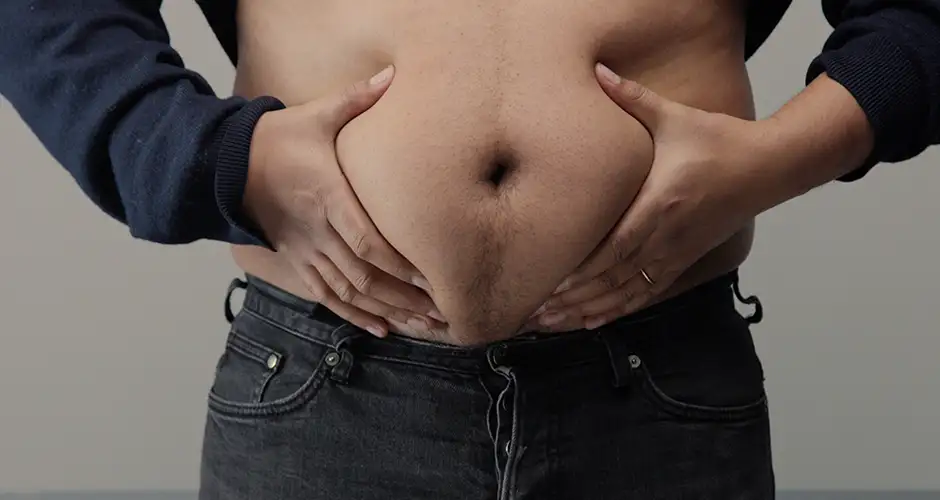
Belly Fat Warning Signs Heart Risk – Image/Wellness Digest
This detailed analysis explores the clinical transition of abdominal adiposity from a cosmetic grievance to a primary diagnostic marker for cardiovascular events. We identified the specific physiological signals that indicate your heart may be under metabolic stress by utilizing the data from 2025 – 2026 from the UK Biobank and elite research institutions.
The Delayed Lead: The “Beer Belly” Illusion
James, a 52-year-old from Chicago, considers himself fairly fit. He plays weekend golf, walks his dog daily, and maintains what he jokingly calls a classic dad bod.
To James, his protruding stomach is a badge of a life well-lived, the result of craft beers and steak dinners. However, James recently noticed that his belly isn’t pinchable like it used to be; it is firm, almost like a drum. He assumes he just needs to do more sit-ups.
The moment of truth arrives during a routine physical when his doctor explains that this hard belly isn’t just extra padding. It is a biological shield hiding a more sinister reality: early-stage arterial scarring and heart-muscle thickening.
For James, and millions of others in the US and UK, the mirror is no longer reflecting an aesthetic choice, but a silent health warning that requires immediate clinical attention.
The Nut Graf: From Vanity to Survival
In 2026, medical science has officially reclassified visceral fat from stored energy to an active toxic organ. This article reveals why your waistline is a more accurate crystal ball for heart health than any scale, providing the seven red flags that your internal fat is actively damaging your cardiovascular system.
The Authority-Evidence Tier: The 33,000-Adult Benchmark
The traditional reliance on the Body Mass Index (BMI) is being systematically dismantled by high-precision imaging.
The Landmark Study
In late 2025, researchers from McMaster University and the UK Biobank published a defining study in Communications Medicine that analyzed MRI data from over 33,000 adults in the UK and Canada. The objective was to determine how fat distribution, specifically visceral adipose tissue (VAT) and liver fat, impacts the structural health of the heart and brain.
The Silent Killer Data
The study found that even in individuals with a healthy BMI, high levels of hidden visceral fat were directly linked to a significant thickening and clogging of the carotid arteries in the neck. These arteries are the primary supply lines for the brain; their narrowing is a key predictor of stroke and heart attack. Crucially, this damage occurred independently of blood pressure or cholesterol levels, proving that hidden fat is an autonomous risk factor.
Heart Age vs. Real Age
Complementary research from Imperial College London utilized AI to evaluate heart and body scans from 21,241 participants. They discovered that excessive VAT causes the heart to age significantly faster than the rest of the body. This premature aging is characterized by stiffening of heart tissues and inflamed blood vessels, which often occur years before the first symptoms of cardiovascular disease (CVD) appear.
The Brain Candy List: 7 Warning Signs
Scientific consensus now highlights seven specific indicators that your abdominal fat has crossed the line from subcutaneous to systemically dangerous.
The “Hard” Belly Test
If you cannot easily pinch your belly fat between your fingers, it is likely visceral fat. This hard fat sits beneath the muscle wall, pushing the abdominal cavity outward and creating a firm sensation.
The 0.5 Ratio Breach
Your waist measurement should be less than half of your height (WHtR < 0.5). If your waist-to-height ratio exceeds this threshold, clinical data shows a sharp increase in cardiometabolic risk, even if the scale says your weight is normal.
The Apple Shift
Fat migrating from the hips and thighs to the midsection is a primary warning sign. While pear-shaped fat (gluteofemoral) can be protective, an apple-shaped distribution signals the hormonal shifts, such as declining estrogen in menopause or low testosterone in men, that feed visceral deposits.
Post-Carb Fatigue
Crashing or feeling intensely sleepy after a high-carbohydrate meal is a sign of insulin resistance. This resistance forces the body to store glucose as visceral fat, which in turn releases chemicals that further inflame the heart.
The Neck Warning
External signs like skin tags or darkened, velvety skin folds on the neck (Acanthosis Nigricans) are markers of high circulating insulin and metabolic stress that often mirror the accumulation of fat around the heart.
Pant-Size Creep with Stable Weight
If your belt is getting tighter but the number on the scale remains unchanged, you are experiencing Sarcopenic Obesity. This means you are losing lean heart-protective muscle and replacing it with heart-damaging visceral fat.
The Skinny Fat Trap
Having thin arms and legs but a visible potbelly is the most dangerous phenotype. This Thin on the Outside, Fat on the Inside state is the strongest indicator that your organs are being crowded by metabolically active, inflammatory fat.
The Curiosity Gap: The “I Workout” Myth
A dangerous misconception prevalent in the UK and the US is the Fit but Fat trap. Many believe that regular cardio or hitting the gym cancels out the risks of a large waistline. However, science reveals that you cannot simply outrun the toxic signaling of visceral fat.
Visceral fat is not dormant; it acts as a chemical factory, constantly secreting pro-inflammatory cytokines like Interleukin-6 (IL-6) into the portal circulation. These chemicals cause chronic, low-grade inflammation that damages the lining of your arteries, endothelial dysfunction, even while you are exercising.
While strength training is vital for metabolic health, it must be paired with specific lifestyle signals that tell the body it is safe to stop storing visceral energy. Crunches may build a stronger abdominal wall, but they do nothing to stop the VAT behind that wall from inflaming your heart.
Lifestyle Blueprint: 3 Non-Negotiable Heart Fixes
To protect your heart, you must lower your body’s baseline inflammation through three specific, low-friction habits:
The 10-Minute Metabolic Stroll: A simple 10-minute walk after every meal stabilizes blood sugar and significantly lowers the insulin response that drives visceral storage.
The Mediterranean Shift: Prioritize extra-virgin olive oil; its polyphenols have been shown to “quiet” the inflammatory signaling from VAT to your heart.
Prioritize the 8-Hour Reset: Poor sleep spikes cortisol, which signals the body to protect the heart by packing fat around it. Aim for 7–9 hours of quality rest to reset your hormonal clock.
The Kicker: The Tape Measure Truth
Your heart does not care about your weight or your dress size. It cares about the space it has to function. Following the latest NICE guidelines, take a tape measure to your waist tomorrow morning. Your heart’s future is written in inches, not pounds; ensure your ratio stays below 0.5.
FAQ
Q: How do I know if my belly fat is dangerous?
Q: What is visceral fat and why is it bad for the heart?
Q: Can you have heart risk even with a normal weight?
Q: What is a healthy waist-to-height ratio?
Q: Does exercise reduce belly fat and heart risk?
Q: Why does my waist increase even if my weight stays the same?
- Skinny fat linked to silent artery damage, McMaster study. https://healthsci.mcmaster.ca/skinny-fat-linked-to-silent-artery-damage-mcmaster-study-reveals/
- MRI assessment of adipose tissue fatty acid composition in the UK Biobank. https://pubmed.ncbi.nlm.nih.gov/39051177/
- A study finds hidden body fat is linked to faster heart ageing. https://www.imperial.ac.uk/news/articles/medicine/institute-clinical-sciences/2025/new-study-finds-hidden-body-fat-is-linked-to-faster-heart-ageing/





 This article contains incorrect information.
 This article doesn’t have the information I’m looking for.